Dental Practice Rota Management: How to Optimise Staff Wages in Your Practice
 by Jonathan Beacher, Founder
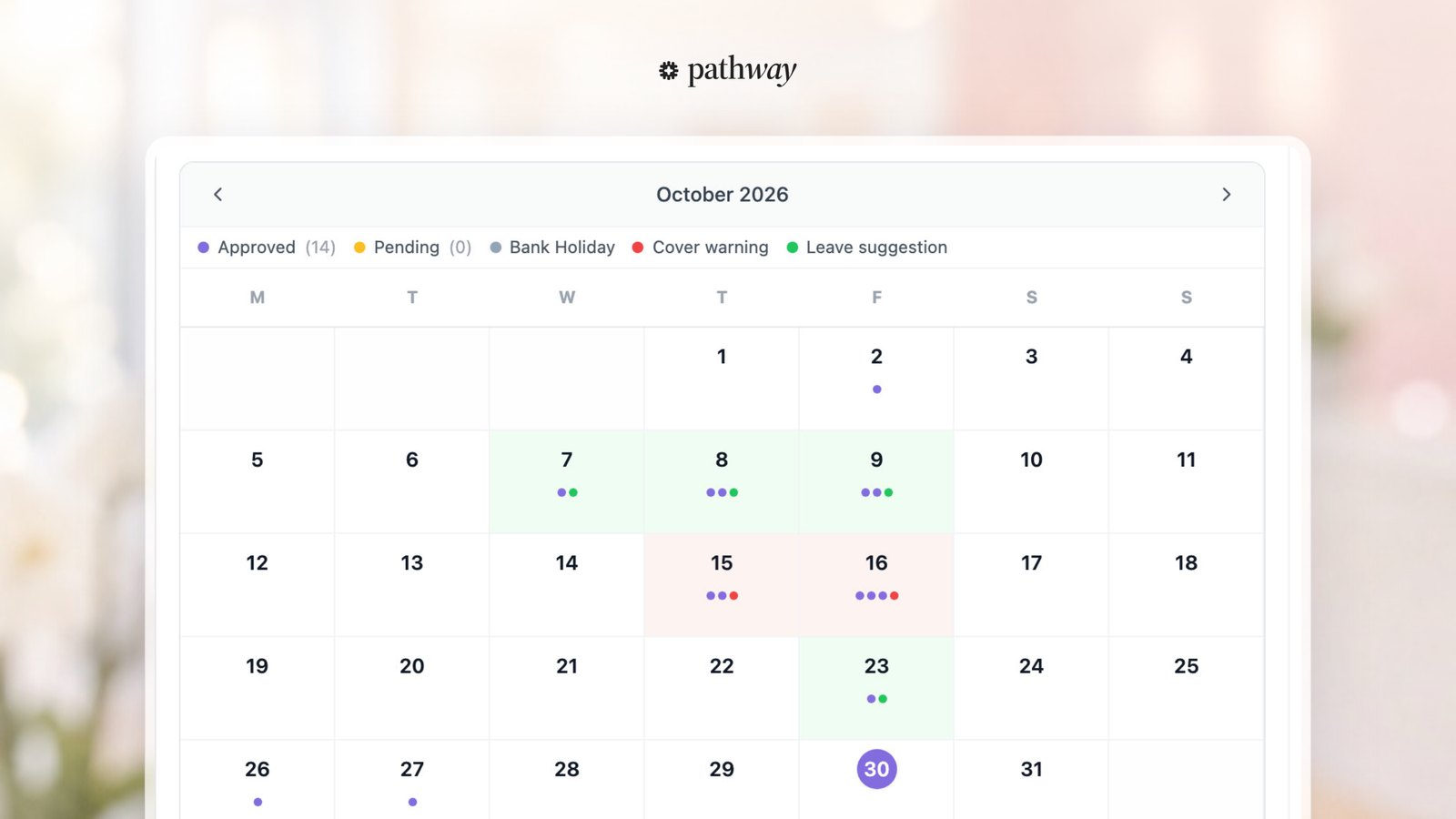
By the time your month starts, it's often too late to truly optimise your staff wage bill. The rota is set, leave has been approved, and the locums are booked. Payroll just adds it up.
Staff wages are one of the biggest costs in a dental practice, and one of the few you can actually control. But the control sits in decisions made weeks earlier: which dentists are in, which nurses are paired with them, whose leave lands when, and how gaps get filled. Get those right and your wage bill follows your diary. Get them wrong and you pay for nurses with no dentist, locums you didn't need, and minutes nobody worked.
This guide is for practice owners and managers who want to bring the wage bill down without cutting the hours people rely on.
The short version
- Build the rota from the clinical diary outwards: dentists' sessions first, then nurses, then everyone else.
- Line nurse leave up with dentist absence, so time off lands in the weeks that cost you least.
- Treat part-time hours and extra days as a budget, and spend it before you pay for locums.
- Pay for the hours actually worked, checked against the rota.
- Track five numbers every month. If you can't see them, you can't manage them.
Rota mistakes that cost you money
Most of the waste isn't dramatic. It's small, repeated and invisible on any single day.
Nurses with no dentist. A nurse is a fixed cost whether or not their dentist is in. When a dentist is off for three days and their nurse is rota'd anyway, you're paying for three days with little to do. At 14 an hour (pounds or dollars, the maths is the same), that's 336 for one nurse in one week.
Leave that's mismatched between dentists and nurses. When dentists and nurses book leave independently, it rarely lines up. The nurse takes a week off while their dentist is working, so you pay for cover. Then the dentist takes a week off while the nurse is in, so you pay for idle time. You pay twice for the same two weeks.
Expensive locums. Last-minute gaps get filled at the highest rate, often by someone who doesn't know your practice, your systems or your dentists. Most of these gaps were visible weeks earlier on the leave calendar.
Leave overpaid to part-timers across the year. Staff on three or four days a week, or with hours that change during the year, are where leave accruals go wrong. Overpayments build slowly, show up when someone leaves, and are rarely clawed back.
Timesheets that don't reflect lateness. If timesheets simply copy the rota, someone who arrives fifteen minutes late is still paid from the start of their shift. Ten minutes a day across twenty people is over 30 hours a month.
Here's what the first two mistakes cost over a year. Take a practice with four dentists who each take 25 days off. That's 100 dentist days off. If only half of those line up with their nurse's leave, you have around 50 nurse days with no dentist. At 14 an hour for an eight-hour day, that's about 5,600 a year in wages for time with no patients to support, before you count a single locum.
Build the rota from the diary out
Most rotas are built staff-first: who works which days, then fill the gaps. That's backwards. Your income comes from the clinical diary, so that's where the rota should start.
Start with clinician sessions, including ad hoc specialists
Put every dentist's and hygienist's sessions on the rota first. That includes the specialists who don't work a fixed week: the implant surgeon who comes in on the last Saturday of the month, or the periodontist who works every other Friday. These are the days most likely to be missed, and when they are, someone scrambles for a nurse at the last minute.
Self-employed dentists don't book annual leave or clock in, but they still need to be on the rota. If they're left off, you're planning nurses blind.
Then pair nurses with dentists and rooms
A dentist can't work at full speed without the right nurse, so plan them as a pair. Assign the room, the dentist and their usual nurse together. When the dentist is off, you can see straight away which nurse is free, and decide whether that's a good leave day, a training day or cover somewhere else.
Then fit everyone else around demand
Reception and support cover should follow the diary, not a fixed pattern. If Monday mornings and late afternoons are your busiest times, staff for those. A quiet Wednesday afternoon doesn't need the same cover as a Monday morning.
Plan leave around capacity
Most practices approve leave one request at a time: is anyone else off that day? That question protects cover, but it ignores cost. The better question is: is this a week when we'd be paying for this person with little to do anyway?
Two simple rules change the picture:
- Flag the risk weeks. If too many nurses are already off on a day, or cover drops below what the diary needs, mark it before anyone else books it.
- Flag the good weeks. When a dentist is already off, mark those days as good days for their nurse, and anyone else who supports them, to book leave.
You're not forcing anyone's holiday. You're showing the team which weeks work best for the practice, and most people will happily pick a good week if they can see it.
If you ever want to require leave at set times, check your contracts and local employment rules on notice first. In most practices, a visible calendar does more than a policy.
Treat flexible hours as a budget
Many nurses work three or four days a week, and some would happily pick up an extra day. That flexibility is the cheapest cover you have, but only if you can see it.
Keep track of who usually works which days, who has said they'd do more, and how much leave each person has used. When a gap opens, offer it to your own part-timers first. An extra day from a nurse who knows your practice costs their normal rate. The same day from an agency can cost nearly twice as much, and makes for a slower day for the dentist.
A year view of leave shows the part-time picture clearly: what each person has accrued, booked and has left, month by month. It's the easiest place to spot someone who's about to be overpaid, or a quiet month where too few people have booked anything.
Locums last, and visible on the rota
Locums have their place. But if they're not on the rota, you can't see what they cost. Put every locum on the rota by name and role, the same as your own team. At a glance, you should be able to answer two questions: how much of next week depends on agency cover, and why?
If the answer is "a lot" and the reason is leave, that's a planning problem, not a staffing problem.
Pay for hours actually worked
The rota is the plan. Timesheets are what happened. Compare the two before payroll, not after.
- Approve timesheets against the rota. Late starts, early finishes and anything outside the planned shift should be visible, with a reason.
- Make clock-in prove presence. Phone location is convenient but can drift indoors or be faked. A code on a tablet at reception, or a tag on the wall, means staff have to be in the building.
- Check overtime weekly. Overtime that shows up every week isn't overtime. It's a rota that's short.
Connect the rota to compliance
Optimising wages isn't only about paying for fewer hours. It's about getting the right work from the hours you pay for. Opening checks, cleaning logs and daily safety checklists are all done by someone on the rota. When you can see who was in and whether their checks were completed, the rota becomes a record of the day as well as a plan for it.
Five numbers to track
| Number | Why it matters | Where to find it |
|---|---|---|
| Nurse days with no dentist | Your biggest avoidable wage cost | Rota against clinician sessions |
| Leave taken in dentist-off weeks | Shows whether leave planning is working | Leave calendar |
| Locum and agency spend | Usually a sign that leave was planned too late | Invoices, and locums on the rota |
| Leave balance for part-timers | Catches overpayments before they build up | Year view of leave |
| Paid hours against rota'd hours | Catches lateness, overtime and missing approvals | Timesheets against the rota |
Pick a target for the first number and review it with your team each month. When nurse days with no dentist go down, the others usually follow.
Where Pathway fits
We built Pathway's rotas around this way of working. Dentists, nurses, reception and locums sit on one rota by room, self-employed clinicians and ad hoc specialist patterns are handled properly, and leave suggestions show your team the best weeks to book. Timesheets, clock-in and compliance checks sit on the same platform, for £97 a month with unlimited users. If you're comparing tools, our ranking of dental practice HR software covers the options and what each costs for a team of 20. Or book a walkthrough and see your own rota in Pathway. We import your team and schedules, and the first month is free.
ready to grow your practice?
Bring enquiries, follow-ups and treatment opportunities into one workflow, so your team can convert more patients without adding more admin.